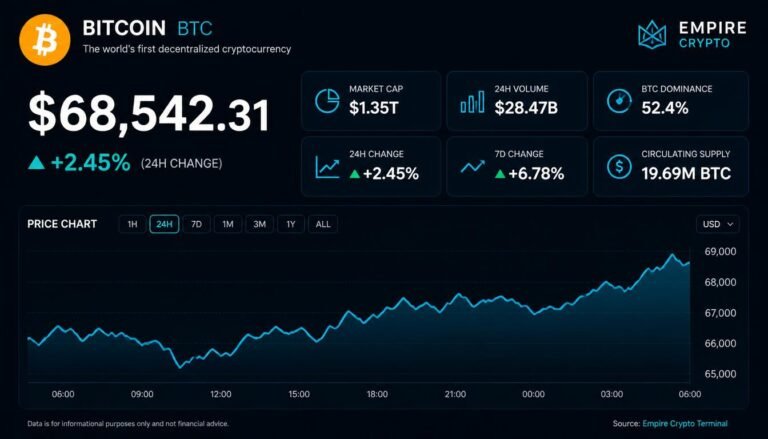
Welcome to the foundational landscape of digital assets. In the modern financial era, navigating the cryptocurrency market requires transitioning away from blind speculation and moving toward data-driven insights. This comprehensive beginner’s guide explores Crypto Data Online, demonstrating how the intersection of public blockchain architecture and advanced analytics tools fuels modern digital innovation.

1. The Anatomy of Crypto Data: Transparency as an Innovation
Traditional financial systems rely on centralized databases held by banks and clearinghouses. These systems are inherently private, making comprehensive, real-time market observation impossible for individual participants.
Cryptocurrencies turn this paradigm upside down. Built on public, decentralized ledgers, blockchain protocols record every transaction, wallet balance, and smart contract execution chronologically across a global peer-to-peer network. This architecture converts data transparency into a fundamental utility. Anyone with an internet connection can query the entire operational history of a network.
┌────────────────────────────────────────────────────────┐
│               THE CRYPTO DATA STREAM                   │
└───────────────────────────┬────────────────────────────┘
                            │
         ┌──────────────────┴──────────────────┐
         ▼                                     ▼
┌─────────────────┐                   ┌─────────────────┐
│ Market Data     │                   │ On-Chain Data   │
├─────────────────┤                   ├─────────────────┤
│ • Order Books   │                   │ • Active Wallets│
│ • Spot Price    │                   │ • Hash Rate     │
│ • Trade Volume  │                   │ • Gas Fees      │
└─────────────────┘                   └─────────────────┘
For beginners, this accessibility can feel overwhelming. To find clarity, we must first categorize the two main types of digital asset data:
Market Data (Off-Chain)
Market data tracks how digital assets trade across external venues like centralized exchanges (CEXs) and decentralized exchanges (Crypto Data Online). This data includes spot prices, historical trading volumes, order book depth, and derivatives metrics like futures liquidations and funding rates. It answers the fundamental question: What is the market doing right now?
On-Chain Data (Cryptographic Intelligence)
On-chain data is pulled directly from the underlying ledger. It monitors structural network metrics, including the volume of tokens transferred, active wallet addresses, smart contract interactions, and miner or validator behaviors. It answers a different question: How healthy is the underlying network?

2. Navigating the Crypto Data Ecosystem: Core Beginner Platforms
To extract actionable intelligence from these massive public streams, specialized data aggregators organize the raw information into readable dashboards. As a beginner, you don’t need expensive enterprise software. You can start with a few foundational, free platforms.
Baseline Aggregators: CoinGecko & CoinMarketCap
These platforms serve as the entry point for asset tracking, pulling data from hundreds of global exchanges to provide a unified snapshot of the market.
- Circulating vs. Total Supply: These metrics help you evaluate a token’s scarcity and inflation schedule.
- Market Capitalization: Calculated by multiplying the current price by the circulating supply ($Market\ Cap = Price \times Circulating\ Supply$). This shows you the true size of an asset, which is a much more accurate health indicator than the unit price alone.
- Exchange Liquidity: Tracks where an asset is traded and checks if there is enough depth to handle buy or sell orders without causing drastic price swings (slippage).
On-Chain & Ecosystem Explorers: DeFiLlama & Token Terminal
When evaluating decentralized applications (dApps) in decentralized finance (DeFi), web3 gaming, or decentralized computing, traditional price charting falls short. These platforms introduce fundamental metrics similar to those used in traditional business analysis.
- Total Value Locked (TVL): The cumulative dollar value of all crypto assets deposited into a protocol’s smart contracts. It serves as a core metric for user trust and capital allocation.
- Protocol Revenue & P/S Ratios: Token Terminal tracks the actual fees users pay to interact with a protocol, allowing you to evaluate a project using Price-to-Sales (P/S) ratios based on concrete cash flows rather than pure speculation.
3. Demystifying On-Chain Analytics: Tracking Real Innovation
The true innovation of crypto data lies in on-chain metrics. By reading the ledger directly, you can see how capital is flowing across the globe in real time. Platforms like Glassnode and Dune Analytics specialize in turning this raw ledger data into visual charts.
To evaluate network adoption, beginners should watch three core indicators:
                  ┌──────────────────────┐
                  │ CORE ON-CHAIN METRICS│
                  └──────────┬───────────┘
         ┌───────────────────┼───────────────────┐
         ▼                   ▼                   ▼
┌─────────────────┐ ┌─────────────────┐ ┌─────────────────┐
│ Active Nodes    │ │ Active Wallets  │ │ Transaction Fees│
├─────────────────┤ ├─────────────────┤ ├─────────────────┤
│ Measures the    │ │ Tracks growth   │ │ Gauges economic │
│ decentralization│ │ in unique user  │ │ demand for the  │
│ and security of │ │ addresses over  │ │ block space of  │
│ the network.    │ │ fixed periods.  │ │ the blockchain. │
└─────────────────┘ └─────────────────┘ └─────────────────┘
Network Activity Profiles
A rising asset price accompanied by declining active wallet addresses or shrinking transaction volumes can signal low organic demand, hinting that the rally might be driven purely by speculation. Conversely, a project with steady growth in daily transactions and active addresses during a market correction often points to resilient user adoption.
Tracking Smart Money Flows
Because every blockchain address is public, analysts can label wallets based on their historical behavior. This allows you to track institutional desks, venture funds, and “whales” (individuals holding massive quantities of a token). Observing whether these large holders are accumulating or distributing assets to exchanges offers helpful context on macro market sentiment.
Supply Distribution Dynamics
On-chain tools let you monitor token distributions across the network. If a handful of early wallets own over 70% of an asset’s circulating supply, the project carries a high central-point-of-failure risk, as a single large liquidation could destabilize the price. A widely distributed asset generally offers a more resilient foundation.
4. Analytical Methodologies for Digital Assets
Successfully navigating crypto data requires a balanced analytical framework. Relying on a single metric is like trying to navigate with a broken compass. Experienced participants use a three-pronged approach:
| Analytical Pillar | Key Data Inputs | Core Objective |
| Fundamental Analysis (FA) | Whitepapers, Tokenomics models, GitHub commits, Revenue data | Determines the intrinsic, long-term value of a protocol. |
| Technical Analysis (TA) | Candlestick patterns, Moving Averages (MA), Volume Profiles | Analyzes historical price and volume data via platforms like TradingView to identify cyclical entry and exit setups. |
| Sentiment Analysis (SA) | Social volume, Funding rates, Fear & Greed Index | Gauges market psychology to identify periods of unsustainable over-optimism or panic selling. |
5. Security & Risk Management: Data as a Shield
In decentralized networks, security is your personal responsibility. Fortunately, you can use public data tools to verify security claims instead of relying on a project’s marketing.
Smart Contract Auditing Repositories
Before interacting with an unfamiliar protocol, check platforms like DeFiLlama or blockchain explorers (like Etherscan or Solscan) to see if the smart contracts have been thoroughly vetted by independent security firms. Look for a clean audit trail and check if the project uses multi-signature setups to manage its treasury.
Identifying Bad On-Chain Behavior
Data tools help you watch for warning signs, such as team tokens suddenly moving to exchanges right after a launch, or anomalous liquidity withdrawals from a DEX pool. These structural imbalances often precede a sudden collapse or exit scam.
Managing Account Security
Data privacy is a crucial part of risk management. Beginners should use strong, isolated credentials:
Critical Safety Principle: Always protect your access points. Use unique passwords, enable app-based Two-Factor Authentication (2FA), and keep your private seed phrases completely offline. Never paste your recovery keys into any online app, document, or website.
6. Practical Steps to Build Your Crypto Data Online
Transitioning into digital assets is most effective when you take a structured, deliberate approach. Here is a practical framework to build your analytical routine:
Step 1: Establish a Baseline Watchlist
Pick 2 or 3 established digital assets (such as Bitcoin or Ethereum). Use an aggregator like CoinGecko to build a personalized dashboard tracking their market caps, daily volumes, and circulating supplies over a couple of weeks.
Step 2: Practice with Simulated Strategies
Instead of deploying capital immediately, use paper trading or clear rules-based methods like Dollar-Cost Averaging (DCA). Automating small, regular acquisitions removes emotional timing stress and lets you focus entirely on learning market dynamics.
Step 3: Explore the On-Chain Landscape
Go to a free platform like DeFiLlama or Dune Analytics. Find your selected assets and examine their operational health—look at transaction volumes, protocol revenue, and user growth trends.
Step 4: Keep a Decision Journal
Document the reasoning behind your practice allocations. Note which data tools, charting metrics, or fundamental reports guided your choice, then review your log every month to refine your approach.
The Next Frontier: Data-Driven Sovereignty
The ongoing digital evolution isn’t just about financial speculation; it’s about a foundational shift toward verifiable transparency. Embracing crypto data online transforms you from a passive spectator into an active, analytical participant. By learning to read market charts, evaluate on-chain health, and spot structural risks early, you build a resilient, informed framework to navigate the decentralized economy Crypto Data Online.
To see these analytical steps put into practice, you can watch this breakdown on How to Research Crypto Like a Pro. This walkthrough offers excellent visual guidance on setting up narratives, analyzing tokenomics, and vetting project teams using public data.