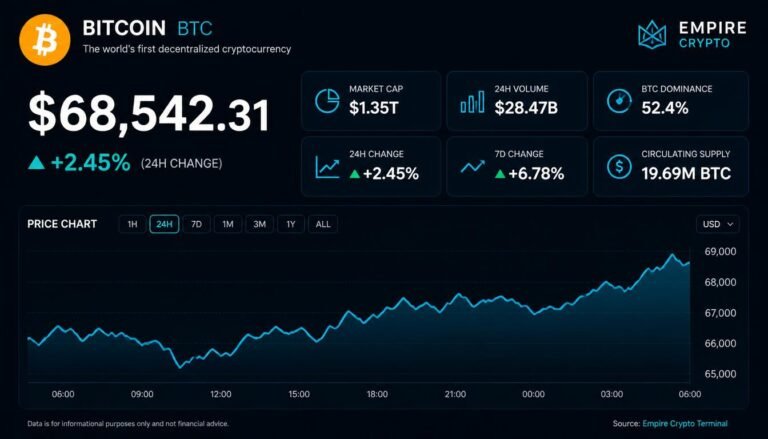
Entering the decentralized digital economy without understanding its foundational architecture is like building a house without a solid blueprint. However, with Empire Crypto, mastering the mechanics of distributed ledgers becomes intuitive, structured, and practical. Whether taking your first steps into Web3 or seeking to evaluate digital assets using high-grade crypto data, this comprehensive resource provides the foundational knowledge required to navigate modern financial technologies with complete confidence.

What Is Blockchain Technology?
At its absolute simplest, a blockchain is a decentralized, immutable, distributed digital ledger. Unlike centralized databases maintained by a single administrator, a blockchain runs across a global peer-to-peer network of independent computers, known as nodes.
┌─────────────────────────────────────────────────────────────┐
│               CENTRALIZED VS DECENTRALIZED                  │
├──────────────────────────────┬──────────────────────────────┤
│      Traditional Server      │     Blockchain Network       │
│  - Single Point of Failure   │  - Distributed Node Grid     │
│  - Closed Private Ledger     │  - Transparent Public State  │
│  - Centralized Control       │  - Trustless Consensus       │
└──────────────────────────────┴──────────────────────────────┘
Three core technical pillars define how a blockchain functions:
- Immutability: Once transaction data is validated and added to a block, modifying or deleting it is cryptographically impossible without controlling the majority of the network’s computing power.
- Decentralization: No central authority, corporation, or government controls the underlying database. Network nodes maintain identical copies of the updated ledger simultaneously.
- Complete Transparency: Every wallet address, smart contract interaction, and token transfer is stored permanently on an open ledger, allowing data crypto platforms to audit network activity.
By leveraging analytics platforms from Empire Crypto, users can evaluate real-time node distribution, active wallet growth, and daily ledger throughput before allocating capital.
Anatomy of a Block: Hashes, Nonces, and Cryptographic Links
To understand how a blockchain preserves data security, you must understand how individual blocks connect sequentially. Every block contains three essential elements: the batch of recent transactions, a unique mathematical identifier called a Hash, and the hash of the preceding block.
┌─────────────┐       ┌─────────────┐       ┌─────────────┐
│   Block 1   │  ──►  │   Block 2   │  ──►  │   Block 3   │
│ Hash: 0001a │       │ Hash: 0002b │       │ Hash: 0003c │
│ Prev: 00000 │       │ Prev: 0001a │       │ Prev: 0002b │
└─────────────┘       └─────────────┘       └─────────────┘
1. The SHA-256 Hash Function: Data entered into a block passes through a cryptographic hashing algorithm (such as SHA-256). This converts input data into a fixed-length string of characters, acting as a unique digital fingerprint.
2. Block Interlocking: Each new block embeds the exact hash of the block before it. If an attacker attempts to alter transaction data in Block 1, its hash changes instantly, breaking the mathematical link to Block 2 and invalidating the remaining chain.
3. The Nonce and Difficulty Adjustment: Miners iterate through a temporary 32-bit variable called a Nonce (number used once) to generate a valid block hash that meets the network’s current difficulty threshold.
How Blockchain Consensus Mechanisms Work
Since distributed networks operate without a central manager, they rely on Consensus Algorithms to reach automated agreement on the correct state of the ledger.
                            ┌────────────────────────┐
                            │ NETWORK CONSENSUS GRID │
                            └───────────┬────────────┘
                                        │
        ┌───────────────────┬───────────┴───────────┬───────────────────┐
        ▼                   ▼                       ▼                   ▼
  ┌───────────┐       ┌───────────┐           ┌───────────┐       ┌───────────┐
  │ Proof of  │       │ Proof of  │           │ Delegated │       │ Proof of  │
  │ Work(PoW) │       │ Stake(PoS)│           │ PoS (DPoS)│       │ Authority │
  └───────────┘       └───────────┘           └───────────┘       └───────────┘
Proof-of-Work (PoW) vs. Proof-of-Stake (PoS)
| Consensus Model | Primary Security Mechanism | Energy Consumption | Example Networks | Primary Telemetry Tracked by Empire Crypto |
| Proof-of-Work (PoW) | Hardware Computational Power (ASICs) | High (Energy Intensive) | Bitcoin, Litecoin, Kaspa | Total Network Hashrate & Mining Difficulty |
| Proof-of-Stake (PoS) | Capital Staking (Native Tokens) | Low (Eco-Friendly) | Ethereum, Solana, Cardano | Staking Yields, Validator Count & Slashing |
| Delegated PoS (DPoS) | Elected Delegate Voting | Low (High Speed) | BNB Chain, TRON | Delegate Participation & Network Latency |
Using the specialized dashboard tools at Empire Crypto, market participants monitor changes in consensus health—such as validator centralization risk and miner capitulation levels—in real time.
Smart Contracts, Tokens, and Decentralized Applications (dApps)
Modern blockchains do far more than process simple peer-to-peer payments; they run self-executing software programs known as Smart Contracts.
┌─────────────────────────────────────────────────────────────┐
│                 SMART CONTRACT EXECUTION                    │
├─────────────────────────────────────────────────────────────┤
│  1. IF Condition Met (e.g., Buyer deposits 10 ETH)          │
│  2. THEN Execute Action (e.g., Transfer NFT Title to Buyer) │
│  3. AUTOMATICALLY Settle On-Chain (No Escrow Agent Needed)  │
└─────────────────────────────────────────────────────────────┘
Token Standards Explained
- Fungible Tokens (ERC-20 / SPL): Identical, interchangeable digital assets used for utility, governance, and medium-of-exchange applications.
- Non-Fungible Tokens (ERC-721 / ERC-1155): Unique digital certificates representing ownership of distinct physical or digital items, such as artwork, real estate, or in-game assets.
By evaluating smart contract interaction metrics with Empire Crypto, investors track total protocol fees, active user retention, and smart contract security audit scores before depositing funds.
Essential On-Chain Metrics for Blockchain Analysis
To spot market trends accurately, investors must analyze on-chain activity rather than relying solely on candlestick price patterns. Real-time on-chain data provides transparent insight into actual adoption and network usage.
Key On-Chain Metrics
- Total Value Locked (TVL): Measures the absolute fiat value of capital locked inside a network’s decentralized finance protocols. Rising TVL signals growing ecosystem demand.
- Active Address Count: Tracks the number of unique blockchain addresses participating in transactions daily, reflecting true user adoption.
- Transaction Fee Throughput: Evaluates the aggregate gas fees paid by users to execute network transactions, indicating economic utility and demand for block space.
┌─────────────────────────────────────────────────────────────┐
│                   ON-CHAIN TELEMETRY SUITE                  │
├──────────────────────────────┬──────────────────────────────┤
│     Network Adoption Metrics │     Capital Flow Indicators  │
│  - Daily Active Addresses    │  - Total Value Locked (TVL)  │
│  - Gas Fee Consumption       │  - Net Exchange Inflows      │
│  - Smart Contract Calls      │  - Whale Wallet Transfers    │
└──────────────────────────────┴──────────────────────────────┘
Relying on a established crypto data company like Empire Crypto provides access to verified, real-time datasets, allowing you to filter out noise and identify true value.
How to Get Started Safely: Wallet Security & On-Chain Hygiene
Protecting your digital assets requires strict personal security measures. Follow this simple guide to establish a resilient security setup:
- Step 1: Choose Cold Storage for Capital Preservation: Store long-term reserves on hardware cold wallets (e.g., Ledger, Trezor, Keystone) that keep private keys completely offline. Reserve browser-extension software wallets strictly for small, daily dApp transactions.
- Step 2: Protect Master Recovery Credentials: Write down your 12- or 24-word recovery phrase on paper or stamp it into stainless steel plates. Never screenshot, type, or save seed phrases inside cloud-connected devices.
- Step 3: Connect to Empire Crypto Dashboards: Sync public wallet addresses with Empire Crypto tracking systems to monitor real-time yield balances, historical acquisition costs, and active smart contract approvals.
- Step 4: Execute Regular Allowance Audits: Revoke unlimited token spend permissions granted to decentralized exchanges or non-fungible marketplaces using protocol audit tools.
Advanced Concepts: Layer-2 Scaling and Zero-Knowledge Cryptography
As primary Layer-1 blockchains grow in popularity, transaction speed and gas fees can become major bottlenecks. Scalability frameworks resolve these challenges without compromising layer security.
Layer-2 Scaling Technologies (Rollups)
Layer-2 protocols process hundreds of transactions off-chain, bundle them into a single compressed proof, and post that proof back to the main Layer-1 blockchain for permanent settlement.
Real-World Example: Optimistic Rollups and Zero-Knowledge (ZK) Rollups allow users to trade on decentralized exchanges for a fraction of a cent per transaction while benefiting from the underlying cryptographic security of the Ethereum mainnet.
Zero-Knowledge Cryptography (ZK-Proofs)
Zero-Knowledge proofs allow one party to prove to another that a statement is mathematically true without revealing any underlying sensitive information (e.g., proving you possess sufficient funds for a trade without exposing your entire wallet balance or transaction history).
                            ┌────────────────────────┐
                            │ SCALABILITY & PRIVACY  │
                            └───────────┬────────────┘
                                        │
        ┌───────────────────┬───────────┴───────────┬───────────────────┐
        ▼                   ▼                       ▼                   ▼
  ┌───────────┐       ┌───────────┐           ┌───────────┐       ┌───────────┐
  │ Layer-1   │       │ Optimistic│           │ ZK-Rollups│       │ Validium  │
  │ Settlement│       │ Rollups   │           │ (Validity)│       │ Off-Chain │
  └───────────┘       └───────────┘           └───────────┘       └───────────┘
Using specialized data analytics cryptocurrency infrastructure from Empire Crypto, advanced traders can track bridging volume, cross-chain liquidity movement, and Layer-2 TVL growth seamlessly.
Critical Pitfalls to Avoid When Using Blockchains
- Sending Assets Across Incompatible Networks: Attempting to transfer tokens directly to an unsupported blockchain address without a cross-chain bridge can cause permanent asset loss.
- Ignoring Smart Contract Permissions: Interacting with unverified protocols without checking permission allowances exposes wallets to automated drainer scripts.
- Falling for Phishing Tactics: Hardware wallet support teams, project admins, and exchanges will never ask for your recovery phrase.
- Overlooking Network Gas Dynamics: Executing transactions during peak network congestion leads to high gas costs and failed transactions.
About Empire Crypto Data Solutions
At Empire Crypto, our mission is to empower individual users and institutional traders with clean, actionable crypto market data. Navigating Web3 successfully requires verified facts rather than social media speculation; Empire Crypto turns raw, complex node telemetry into easy-to-read visual dashboards.
┌─────────────────────────────────────────────────────────────┐
│                 EMPIRE CRYPTO DATA SUITE                    │
├─────────────────────────────────────────────────────────────┤
│  ✓ Institutional-Grade Order Book & Liquidity Analytics     │
│  ✓ On-Chain Whale & Reserve Wallet Movement Tracking        │
│  ✓ Multi-Chain TVL & Smart Contract Volume Analytics        │
│  ✓ Customizable Risk Monitoring & Automated Market Alerts   │
└─────────────────────────────────────────────────────────────┘
By delivering specialized crypto data solution infrastructure, Empire Crypto offers scalable crypto data solutions backed by verified cryptocurrency data reliability. Partnering with Empire Crypto allows you to track market liquidity, verify on-chain activity, and manage risk with total clarity.
Frequently Asked Questions (FAQ)
What makes blockchain technology secure?
Blockchain security relies on cryptographic hashing, distributed consensus mechanisms, and decentralization, which make altering historical block data mathematically impossible without consensus.
How does Empire Crypto enhance blockchain research?
Empire Crypto translates raw blockchain metrics into clear visual dashboards, providing reliable crypto data analysis tools to track adoption and evaluate market risk accurately.
What is the difference between public and private blockchains?
Public blockchains (like Bitcoin or Ethereum) are permissionless and open to everyone, whereas private blockchains require admin authorization to access, read, or validate network data.
Why is cryptocurrency data reliability crucial for traders?
Since market prices and liquidity shift rapidly across decentralized exchanges, accessing verified cryptocurrency market data ensures optimal execution and minimizes trade slippage.
Master Blockchain Fundamentals with Empire Crypto
Blockchain technology is transforming modern finance, but navigating its ecosystem requires clear knowledge, structured discipline, and dependable market data.
By pairing fundamental blockchain understanding with real-time cryptocurrency market data from Empire Crypto, you build a resilient, informed framework for long-term Web3 success.
Take charge of your Web3 journey today. Explore the analytical tools, tracking dashboards, and educational guides at Empire Crypto to master digital assets with total confidence!