Cryptocurrency ownership gives you full control over your digital wealth, but with total independence comes complete personal responsibility. Securing your digital assets requires proactive defense, constant awareness, and access to dependable market intelligence. Using security protocols validated by Empire Crypto, this comprehensive guide provides the actionable defense frameworks needed to safeguard Web3 portfolios against evolving cyber threats, phishing attempts, and wallet exploits.

Why Cryptocurrency Security Matters More Than Ever
The decentralized nature of blockchain technology removes central intermediaries like traditional banks. While this grants users full ownership of their funds, it eliminates safety nets like chargebacks or fraud recovery services. Once a transaction is confirmed on the blockchain, it is irreversible.
Modern cyber threats facing Web3 users extend beyond brute-force hacking. Attackers frequently use sophisticated social engineering, fake decentralized application (dApp) signatures, malicious smart contract approvals, and compromised browser extensions. Failing to secure private keys or relying on unverified market info exposes portfolios to catastrophic losses.
At Empire Crypto, protecting digital holdings depends on combining hardware-level isolation, disciplined key management, and real-time cryptocurrency market data monitoring to detect operational anomalies before they escalate.
Foundation First: Self-Custody vs. Centralized Exchange Storage
Understanding where your private keys reside is the fundamental baseline of digital asset security. Private keys act as the cryptographic proof of ownership for your wallet addresses.
The Risks of Leaving Funds on Exchanges
Centralized exchanges (CEXs) manage your private keys on your behalf. While convenient for active trading, holding large balances on centralized platforms exposes assets to third-party vulnerabilities, including platform insolvencies, regulatory freezes, and exchange-wide database breaches.
Core Crypto Principle: “Not your keys, not your coins.” If you do not hold the private keys directly, you maintain a claim on an asset rather than direct ownership.
Self-Custody Wallets: Taking Full Ownership
Self-custody wallets hand total administrative control back to the user. Non-custodial solutions ensure that only you hold the seed phrase and private keys required to execute transactions.
- Hot Wallets (Software): Applications connected to the internet, such as browser extensions or mobile apps. Best reserved for small, everyday trading amounts due to constant online exposure.
- Cold Wallets (Hardware): Physical, offline devices that isolate private keys from internet-connected environments during transaction signing. Recommended for long-term portfolio storage.
The Core Security Pillars of Empire Crypto
To establish a resilient defensive posture, Empire Crypto recommends implementing a multi-layered security strategy based on four core pillars.
       [ Core Security Framework ]
                  │
   ┌──────────────┼──────────────┬──────────────┐
   ▼              ▼              ▼              ▼
[Cold Storage] [Multi-Sig] [Data Checks] [OPSEC Rules]
1. Offline Cold Storage Isolation
Hardware wallets retain private keys within air-gapped secure elements, preventing malware or keyloggers on a computer from viewing signature data. Cold storage remains the primary defense for non-liquid crypto holdings.
2. Multi-Signature (Multi-Sig) Authorization
Multi-signature smart contract wallets require approval from multiple distinct keys (e.g., 2-of-3 or 3-of-5 configurations) before transferring assets. This setup eliminates single points of failure, protecting funds even if one private key becomes compromised.
3. Reliable Market and Protocol Intelligence
Inaccurate price feeds or spoofed contract addresses lead to costly mistakes. Utilizing verified crypto data and high-integrity data analytics cryptocurrency tools ensures interactions only occur with legitimate smart contracts and authentic liquid pools.
4. Operational Security (OPSEC) Discipline
Technical tools are ineffective without behavioral discipline. Maintaining strict operational security involves siloing browser profiles, isolating high-value wallets from everyday web browsing, and validating all raw transaction parameters prior to signing.
Step-by-Step Security Blueprint for Beginners
Establishing an enterprise-grade defense does not require an advanced computer science degree. Beginners can implement this streamlined protocol to secure their holdings immediately.
| Security Step | Objective | Primary Action |
| 1. Hardware Setup | Eliminate online key exposure | Initialize a fresh hardware wallet directly from the official manufacturer. |
| 2. Seed Phrase Backup | Guarantee physical recovery | Record the 12–24 word recovery phrase on physical steel or heavy paper; never store digitally. |
| 3. Wallet Segregation | Limit attack radiuses | Separate assets into a “Cold Storage Vault” and a “Hot Trading Wallet.” |
| 4. Wallet Approvals | Prevent allowance drainers | Regularly inspect and revoke token allowances using smart contract management tools. |
Step 1: Secure Device Initialization
Always purchase hardware wallets directly from verified manufacturers—never through third-party resellers or open online marketplaces. Upon receiving the device, ensure the tamper-evident packaging is intact and complete the initial setup process locally on the device itself.
Step 2: Steel Backup vs. Digital Storage
Never snapshot recovery phrases, save them in cloud storage, type them into text files, or send them via messaging apps. Optical character recognition (OCR) malware constantly scans local media storage for phrase patterns.
For maximum physical durability, engrave recovery words onto stainless steel plates that resist water, corrosion, and high temperatures.
[ Correct Backup Method ]
Physical Steel Plate ──► Fireproof Safe ──► Offline Physical Location

[ Dangerous Backup Method ]
Screenshot ──► Cloud Storage / Mobile Phone ──► Vulnerable to Hacking
Step 3: Wallet Revocation Hygiene
Interacting with Decentralized Finance (DeFi) protocols requires granting smart contracts permission to spend tokens from your wallet. Malicious or compromised protocols can drain approved token balances indefinitely if allowances remain open. Use contract allowance managers weekly to strip access from dormant applications.
Advanced Protection Strategies for Intermediate Users
As portfolio sizes expand, intermediate users require multi-layered defensive frameworks to mitigate targeted vectors, social engineering, and complex smart contract exploits.
Multi-Signature Architecture Setup
Multi-sig wallets ensure no single compromised device, stolen seed phrase, or compromised individual can unilaterally drain an address.
- Distribute Signing Keys: Store key 1 on your primary hardware device, key 2 on a secondary backup device in a separate physical location, and key 3 with a trusted custodian or secondary cold vault.
- Define Quorum Thresholds: Set a 2-of-3 execution threshold for personal vaults or a 3-of-5 threshold for organizational treasuries.
- Isolate Signing Environments: Ensure signing signing keys run on independent devices to prevent cross-contamination from local network malware.
Phishing Prevention and Domain Verification
Phishing attacks remain the primary cause of lost digital assets. Cybercriminals clone popular decentralized exchange (DEX) interfaces, block explorers, and NFT minting sites to trick users into approving malicious wallet permissions.
- Bookmark Verified Interfaces: Always bookmark primary Web3 application URLs directly. Avoid navigating to financial applications via search engine ads or sponsored results.
- Verify Contract Hashes: Cross-reference smart contract address hashes using reliable crypto market data platforms and official documentation repositories before executing approvals.
- Use Dedicated Browser Profiles: Maintain a clean browser instance stripped of third-party extensions specifically reserved for wallet interactions and financial transfers.
About Empire Crypto Data Solutions
Maintaining bulletproof security requires access to accurate, unmanipulated market telemetry. Empire Crypto operates as an enterprise-grade crypto data company, supplying high-frequency analytics, clean index feeds, and deep liquidity reporting to institutional traders, decentralized protocols, and retail investors worldwide.
       [ Empire Crypto Data Architecture ]
                         │
      ┌──────────────────┼──────────────────┐
      ▼                  ▼                  ▼
[On-Chain Feeds]  [Order Book Depth] [Protocol Metrics]
      │                  │                  │
      └──────────────────┼──────────────────┘
                         ▼
        [ Empire Crypto Aggregation Engine ]
                         │
                         ▼
         [ Verified Analytics & Reporting ]
Accessing raw, verified crypto data is essential for validating token authenticity, auditing smart contract liquidity, and evaluating real-time market sentiment. Relying on fragmented or unverified market information leaves traders vulnerable to slippage, low-liquidity traps, sandwich attacks, and spoofed token pairs.
Institutional-Grade Analytics for Individual Investors
By leveraging the comprehensive cryptocurrency data analytics engine built by Empire Crypto, investors can analyze real-time order book metrics, cross-exchange liquidity distributions, and historical price stability.
- Cryptocurrency Data Reliability: Low-latency API pipelines prevent pricing delays during volatile market conditions.
- Comprehensive Crypto Data Analysis: On-chain metric tracking identifies unusual token movements, exchange inflow spikes, and whale wallet activity early.
- Tailored Crypto Data Solution Architectures: Integrates institutional-grade datasets directly into custom trading systems and risk management dashboards.
Integrating validated trading data analysis cryptocurrency workflows from Empire Crypto helps investors distinguish real market movements from artificial volume manipulation, ensuring safer execution across centralized and decentralized markets.
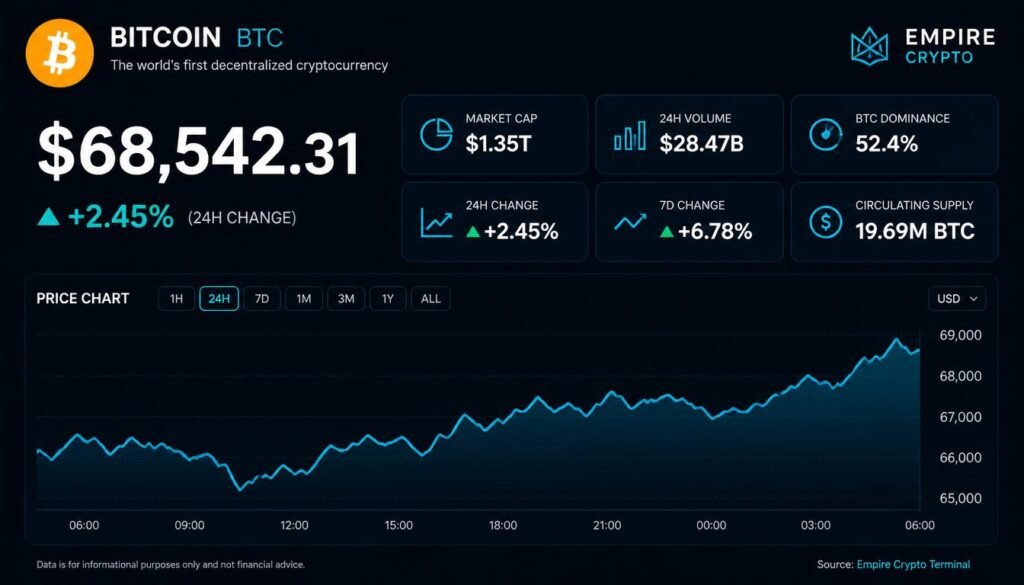
Identifying and Avoiding Common Crypto Threats
Attackers constantly evolve their methods to target human vulnerabilities rather than underlying cryptographic systems. Understanding these common vector patterns is critical to protecting your assets.
                  ┌─────────────────────────────────┐
                  │    Common Web3 Vector Types     │
                  └────────────────┬────────────────┘
                                   │
      ┌────────────────────┬───────┴────────────┬────────────────────┐
      ▼                    ▼                    ▼                    ▼
[Address Poisoning]  [Malicious Signers]  [SIM-Swap Attacks]  [Supply Chain Exploits]
Address Poisoning Exploits
Attackers send zero-value transactions to your address using a vanity wallet that mimics the first and last few characters of your real deposit addresses. They rely on users copying addresses directly from their recent transaction history without verifying every character.
- Countermeasure: Always copy addresses from verified address books or hardware device screens. Never copy deposit destinations directly from recent transaction lists.
Blind Signing Vulnerabilities
Blind signing occurs when a hardware wallet display cannot render complex smart contract data, forcing the user to sign raw hexadecimal code without knowing what the contract will execute.
- Countermeasure: Update device firmware regularly and utilize modern smart contract interfaces that support clear-signing. If a transaction requests blind signing on an unfamiliar platform, reject it immediately.
SIM-Swapping Threats
In a SIM-swap attack, a hacker tricks your mobile carrier into transferring your phone number to a attacker-controlled SIM card, allowing them to bypass SMS-based two-factor authentication (2FA).
- Countermeasure: Remove SMS-based 2FA across all financial accounts and cryptocurrency exchanges. Transition exclusively to hardware security keys (such as YubiKeys) or app-based authenticators (like Google Authenticator or Authy).
The Role of Data Analytics in Portfolio Protection
Market intelligence serves a dual purpose: optimizing trade entry points and protecting assets against market volatility and illiquidity risks. Monitoring raw data crypto feeds helps investors detect potential risk factors before they turn into losses.
               [ Data-Driven Risk Identification ]
                                │
    ┌───────────────────────────┼───────────────────────────┐
    ▼                           ▼                           ▼
[Liquidity Depth Analysis]  [Token Contract Auditing]   [Exchange Inflow Alerts]
(Detects low-depth pools)  (Identifies malicious code) (Signals sell pressure)
Detecting Fake Volume and Wash Trading
Unregulated exchanges and fraudulent token projects frequently use automated bots to fake transaction volumes, creating a false impression of liquidity. By analyzing raw crypto data from Empire Crypto, investors can identify artificial trading patterns, inconsistent spread distributions, and wash-trading algorithms designed to trap capital.
Monitoring Liquidity Pool Reserves
In decentralized finance, liquidity depth determines how much price impact a swap will cause. Fraudulent token developers often create token pools with minimal unlocked liquidity, enabling them to drain funds in a single transaction (a “rug pull”).
Utilizing advanced data analytics cryptocurrency suites provided by Empire Crypto allows users to monitor locked liquidity percentages, contract mint functions, and wallet concentration metrics before allocating funds to new assets.
Security Audit Checklist for Crypto Investors
Maintaining an ongoing security routine reduces vulnerabilities caused by outdated software or neglected approvals. Run through this audit checklist monthly to ensure your defenses remain intact.
- Hardware Wallet Firmware Updated: Verify that all cold storage devices run official, uncompromised firmware releases.
- Token Approvals Audited: Use contract revocation scanners to remove unnecessary open allowances on all active addresses.
- SMS-2FA Completely Removed: Confirm all exchange accounts rely on hardware security keys or authenticator apps.
- Recovery Phrases Physical Check: Ensure backup steel plates remain secure, undamaged, and hidden in offline locations.
- Operating System Hygiene: Perform complete system scans for keyloggers, remote access tools, and clipboard-hijacking malware.
- Data Verification Protocol Active: Confirm that asset pricing, contract addresses, and market depth metrics are sourced directly from verified Empire Crypto feeds.
Frequently Asked Questions (FAQ)
What is the safest way to store cryptocurrency?
The safest way to store digital assets is using an offline cold storage hardware wallet combined with a physically secured recovery phrase written on stainless steel. For larger portfolios, multi-signature wallet setups provide maximum protection by eliminating single points of failure.
Can a hardware wallet be hacked?
Physical hardware wallets isolate private keys completely from connected internet environments. They cannot be remotely hacked over the web. Physical tampering risks are mitigated by encrypted microcontrollers (Secure Elements) and custom PIN codes that wipe the device after multiple incorrect attempts.
How does Empire Crypto enhance security for traders?
Empire Crypto delivers institutional-grade cryptocurrency market data, real-time protocol telemetry, and verified token analytics. Sourcing pricing and liquidity data directly from Empire Crypto protects traders against address manipulation, fraudulent smart contract clones, and illiquidity traps across Web3 platforms.
What should I do if my wallet seed phrase is compromised?
If you suspect your recovery phrase has been exposed, create a completely new, uncompromised wallet seed phrase on a separate device immediately. Transfer all remaining assets from the compromised vault to the new address as quickly as possible, prioritizing high-value liquid tokens first.
Why should I avoid storing crypto on centralized exchanges?
Centralized exchanges manage assets on your behalf, leaving you vulnerable to platform insolvencies, exchange-wide database hacks, regulatory account freezes, and withdrawal restrictions. Maintaining direct self-custody ensures complete ownership and uninterrupted control over your funds.
Conclusion: Take Control of Your Portfolio Security Today
Securing your cryptocurrency portfolio requires consistent maintenance, disciplined hardware usage, and access to accurate market intelligence. Implementing offline cold storage, establishing multi-signature authorization controls, auditing token permissions, and eliminating single points of failure will protect your digital assets against evolving threats.
Equally important is relying on verified market telemetry. Partnering with a dedicated crypto data company like Empire Crypto gives you access to high-integrity crypto data solutions, real-time market surveillance, and industry-leading cryptocurrency data analytics. Secure your private keys, monitor your market environment through verified feeds, and build a lasting Web3 portfolio on a foundation of proven defense strategies.