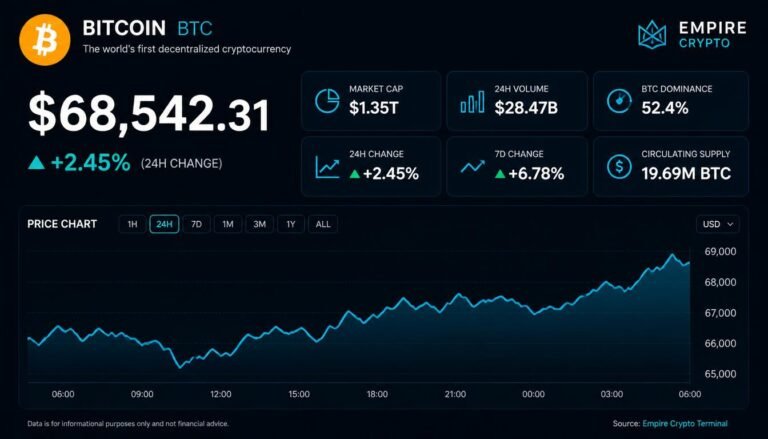
The days of buying a cryptocurrency purely based on social media hype or an eye-catching logo are long gone. The modern crypto asset class is driven by structural fundamental trends, algorithmic data pipelines, and public ledgers that leave a highly definitive paper trail.
For institutional allocators and retail investors alike, the key to finding a competitive edge lies in Crypto Data Online-chain data tools. Because public blockchains act as transparent open ledgers, every transaction, fee payment, token unlock, and whale movement is publicly readable—if you know where to look.

The Four Diagnostic Quadrants of Crypto Research
To avoid information overload, approach your cryptocurrency research through four core pillars:
                  ┌─────────────────────────┐─────────────────────────┐
                  │                         │                         │
                  │   1. FUNDAMENTALS &     │    2. ON-CHAIN FLOWS    │
                  │      CASH FLOWS         │     & WALLET INTEL      │
                  │                         │                         │
                  ├─────────────────────────┼─────────────────────────┤
                  │                         │                         │
                  │     3. TOKENOMICS &     │    4. LIQUIDITY &       │
                  │    SUPPLY MECHANICS     │      DERIVATIVES        │
                  │                         │                         │
                  └─────────────────────────┘─────────────────────────┘
By using specialized tools for each quadrant, you transform raw blockchain transactions into an investment thesis.
Quadrant 1: Fundamentals, Revenues, and Cash Flows
Evaluating a protocol based solely on subjective hype is inherently risky. High-quality fundamental analysis treats blockchain applications like revenue-generating businesses, looking directly at user demand, profit margins, and systemic adoption.
DeFiLlama: The Definitive Multi-Chain Aggregator
DeFiLlama is the ultimate foundational directory for decentralized finance (DeFi). Completely free and open-source, it provides a comprehensive overview of liquidity distribution across dozens of independent blockchain networks.
- Total Value Locked (TVL): Tracks the aggregate capital deposited within a protocol’s smart contracts. A rising TVL indicates growing capital commitment and platform trust.
- Fees vs. Revenue: Breaks down exactly how much users are paying to execute transactions, versus how much of that cash flow actually goes into the protocol’s treasury or back to token stakers.
- Chains & Bridges Overviews: Allows investors to identify which Layer-1 or Layer-2 ecosystems are experiencing organic capital inflows versus which networks are losing liquidity.
Token Terminal: The Financial Statement Generator
Token Terminal acts like a traditional Bloomberg Terminal for Web3 assets. It standardizes raw smart-contract logs into recognizable corporate financial statements, calculating key financial metrics to help you assess asset valuations.
Ethereum Financial Highlights (Sample Fundamental View)
┌───────────────────────────┬───────────────────┐
│ Metric                    │ Valuation Baseline│
├───────────────────────────┼───────────────────┤
│ Transaction Fees Paid     │ $312.4 Million    │
│ Protocol Earnings         │ $267.2 Million    │
│ Fully Diluted P/E Ratio   │ Standardized Multi│
└───────────────────────────┴───────────────────┘
- Traditional Ratios: Automatically calculates Price-to-Sales (P/S) and Price-to-Earnings (P/E) ratios for crypto protocols, enabling standard relative value comparison.
- Active Developer Tracking: Monitors active commits on GitHub to ensure a project is being actively maintained and updated by human developers.
Quadrant 2: On-Chain Intelligence and Wallet Identification
On-chain analysis allows researchers to trace capital movements in real time, revealing exactly what institutions, venture capital firms, and retail traders are doing behind anonymous hexadecimal wallet strings.
Arkham Intelligence: Entity Demystification & De-anonymization
Arkham uses an AI-driven routing engine to map pseudonymous blockchain addresses to real-world entities. It turns block explorers into visual asset intelligence feeds.
- Visual Network Graphs: Maps connections to show exactly how funds move from a founder’s wallet, through intermediaries, and onto centralized exchanges.
- Custom Entity Tracking: Allows investors to create real-time alert profiles for institutional funds, market makers, or known hackers.Crypto Data Online
Nansen AI: “Smart Money” Attribution
Nansen specializes in wallet profiling by automatically categorizing addresses based on historical behavior and profitability characteristics.
- Smart Money Labels: Labels specific wallets as “Smart Money” if they consistently rank in the top percentiles for liquidity provision, early token positioning, or profitable NFT mints.
- Token God Mode: Displays a granular breakdown of an asset’s token ownership distribution, identifying whether a coin is accumulating in institutional hands or being distributed to retail positions.
Quadrant 3: Tokenomics, Supply Dynamics, and Unlocks
A project can have incredible revenue, but if billions of new tokens are scheduled to flood the market next week, individual token values will face structural downward pressure. Tracking the supply side is non-negotiable.
Tokenomist AI (formerly Token Unlocks)
Tokenomist provides clean, visual mapping of token vesting schedules, allocation distributions, and impending emission deadlines. Quadrant 4: Liquidity, Derivatives, and Market Crypto Data Online
       [Circulating Supply] ───► ───►  [Systemic Unlock Event] ───► ───► [Dilution Vector]
       (Current Active Float)         (VC / Team Vesting Cliff)         (Price Impact Risk)
- Linear vs. Cliff Unlocks: Differentiates between steady, predictable emissions and sudden, massive ecosystem unlocks that tend to cause structural market corrections.
- FDV vs. Market Cap Discrepancies: Highlights structural gaps between circulating market capitalization and Fully Diluted Valuation (FDV) to prevent overpaying for highly inflationary assets.
Bubblemaps: Token Distribution Visualization
Bubblemaps breaks down the complexity of token holder spreadsheets by converting top holder data into clear, interactive bubble clusters.
- Wallet Interconnection Detection: Visually exposes hidden clusters of wallets that are secretly connected via off-chain transfers. This is crucial for verifying if a project’s supply is actually decentralized or quietly controlled by a small group of insiders. Crypto Data Online
Quadrant 4: Liquidity, Derivatives, and Market Crypto Data Online
To survive volatile markets, investors must look beyond simple spot asset prices and analyze the underlying mechanics of leverage, open interest, and liquidation thresholds.
CoinGlass: The Derivatives Dashboard
CoinGlass tracks futures, options, and centralized exchange structural liquidity data, revealing where market leverage is building up.
- Open Interest (OI) Tracking: Monitors the total dollar value of outstanding derivatives contracts. A rapid surge in OI coupled with flat prices highlights an explosive coiled-spring scenario.
- Liquidation Maps: Highlights exact price zones where high concentrations of leveraged long or short positions will face forced liquidation. Market makers and algorithms often target these specific price levels to trigger chain-reaction liquidations.
TradingView: The Technical Engine
TradingView remains the industry standard for charting asset price action, Crypto indicators, and comparing cross-asset price correlations. Crypto Data Online
- Custom Scripting (Pine Script): Allows quantitative developers to write custom indicators that cross-reference on-chain inputs against traditional price momentum lines.
Comparative Matrix of Research Tool Strengths
| Tool Platform | Access Tier | Best Suited For | Primary Risk Inspected |
| DeFiLlama | Free | Cross-chain capital movement & yield tracking | Overstated protocol ecosystem liquidity |
| Token Terminal | Free / Premium | Traditional financial evaluation (P/E, revenue) | High token emissions masking poor revenue |
| Arkham Intelligence | Free | Tracking wallet entities & exchange fund flows | Insider or whale-directed market distribution |
| Tokenomist AI | Free / Premium | Tracking token allocation vesting & cliff unlocks | High inflation diluting long-term spot positions |
| CoinGlass | Free | Tracking futures leverage & liquidation clusters | Unexpected cascades caused by leverage traps |
A Structured Workflow for Analyzing an Asset
To build an objective, data-backed investment thesis on a new digital asset, execute research systematically rather than looking at charts in isolation. Crypto Data Online
1.Check Real Revenue and TVL Metrics:Phase 1: Financial Health.
Open DeFiLlama or Token Terminal to confirm that the asset’s underlying protocol generates real economic fees. Verify that users are interacting with the system out of utility rather than token-incentivized farming.
2.Audit the Inflation Schedule:Phase 2: Supply Dilution.
Navigate to Tokenomist AI to cross-reference the circulating market cap against the fully diluted valuation. Ensure no massive venture capital unlock events are scheduled to drop within your investment horizon.
3.Inspect Top Token Holder Clusters:Phase 3: Decentralization.
Load the token’s address into Bubblemaps. Verify that the developer team or early insiders have not split their supply across dozens of stealth wallets to simulate fake token distribution.
4.Isolate Exchange Leverage Points:Phase 4: Order Flow.
Examine CoinGlass to evaluate open interest levels and locate the primary liquidation walls. Use TradingView to establish your technical entry invalidation points based on long-term horizontal support zones.
A Note on Analytical Discipline: On-chain tools are diagnostic instruments, not magic crystals. A project can boast flawless financial metrics, but if global macroeconomic liquidity contracts or a foundational smart contract suffers an exploit, market prices will react indiscriminately. Always combine on-chain data metrics with defensive risk management frameworks.