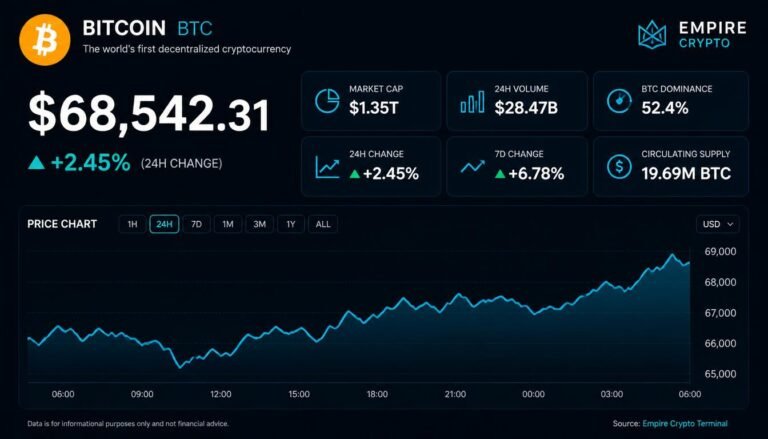
Buying Bitcoin can seem overwhelming if you’re new to cryptocurrency. With so many exchanges, wallets, and security measures, it’s easy to feel lost. But don’t worry—Empire Crypto is here to guide you through a simple, step-by-step process to buy Bitcoin safely and effectively.
Whether you’re just starting or want to improve your crypto knowledge, this guide covers everything from choosing the right platform to storing your Bitcoin securely.
What is Bitcoin?
Bitcoin is the first decentralized digital currency, introduced in 2009 by the mysterious figure Satoshi Nakamoto. Unlike traditional money, Bitcoin is not controlled by a bank or government. Instead, it relies on blockchain technology—a secure digital ledger that records all transactions.

Key points for beginners:
- Bitcoin can be used for payments or as an investment.
- Its supply is limited to 21 million coins, creating scarcity.
- Bitcoin transactions are irreversible but secure.
Real-world example:
A user in Germany can send Bitcoin to someone in Japan instantly, without banks or high fees.
Why Buy Bitcoin?
There are several reasons why people invest in Bitcoin:
- Growth potential: Bitcoin has historically increased in value over time.
- Decentralization: No government controls your money.
- Hedge against inflation: Some see Bitcoin as “digital gold.”
- Easy international transfers: Send money worldwide quickly and cheaply.
Empire Crypto recommends understanding your goals before buying: Are you investing long-term, trading short-term, or using Bitcoin for payments?
Understanding the Risks
While Bitcoin offers opportunities, it’s essential to know the risks:
- Volatility: Bitcoin prices can rise or fall sharply in short periods.
- Security threats: Hacks or scams can result in losing your crypto.
- Regulatory changes: Laws around Bitcoin differ by country and can affect trading.
- Irreversible transactions: Mistakes in sending Bitcoin can’t be undone.
Tip: Only invest what you can afford to lose, especially as a beginner.
Step 1: Choose a Cryptocurrency Exchange
A cryptocurrency exchange is a platform where you can buy, sell, and trade Bitcoin. Popular beginner-friendly exchanges include:
- Coinbase: Simple interface, ideal for beginners.
- Binance: Offers advanced trading tools for intermediate users.
- Kraken: Known for security and variety of coins.
Key factors to consider:
- Fees: Look at transaction and withdrawal fees.
- Security: Two-factor authentication and cold storage are critical.
- User experience: Beginner-friendly interface helps avoid mistakes.
Example:
John wants to buy $100 of Bitcoin. On Coinbase, he can link his bank account, deposit funds, and buy Bitcoin in minutes.
Step 2: Set Up a Crypto Wallet
A crypto wallet stores your Bitcoin securely. There are two main types:
- Hot wallets (online): Convenient but vulnerable to hacks.
- Cold wallets (offline): More secure, ideal for long-term storage.
Popular wallets:
- Ledger Nano X (cold wallet)
- Trezor (cold wallet)
- Exodus (hot wallet)
Tip: Empire Crypto recommends moving Bitcoin from exchanges to a personal wallet for better security.
Step 3: Fund Your Account
Before buying Bitcoin, you need to deposit funds into your exchange account. Methods include:
- Bank transfer: Low fees, slower processing.
- Credit/debit card: Instant but higher fees.
- PayPal (if supported): Quick and easy.
Example:
Emma deposits $500 via bank transfer to her Coinbase account. Once the money arrives, she’s ready to buy Bitcoin.
Step 4: Buying Bitcoin
Once your account is funded, follow these steps:
- Navigate to the “Buy/Sell” section of your exchange.
- Select Bitcoin as the cryptocurrency.
- Enter the amount you want to buy.
- Confirm the transaction.
Tip: Start small and increase your investment as you learn. Empire Crypto suggests beginners start with $50–$200.
Example:
Emma buys 0.01 BTC when the price is $28,000. She pays $280 plus a small fee.
Step 5: Secure Your Bitcoin
Security is crucial in crypto. Best practices include:
- Enable two-factor authentication (2FA).
- Use strong, unique passwords.
- Store most funds in cold wallets.
- Backup wallet recovery phrases safely.
Pro tip: Never share your private keys. They are the only way to access your Bitcoin.
Advanced Buying Strategies
For intermediate users, consider these approaches:
Dollar-Cost Averaging (DCA)
Invest a fixed amount regularly to reduce the impact of volatility.
- Example: Buy $100 of Bitcoin every month, regardless of price.
Trading vs. HODLing
- HODLing: Buy and hold long-term.
- Trading: Buy low, sell high using technical analysis.
Using DeFi Platforms
Decentralized finance platforms allow earning interest on Bitcoin or using it as collateral. Empire Crypto advises understanding risks before using DeFi.

Bitcoin vs Other Cryptocurrencies
While Bitcoin is the first and most popular cryptocurrency, it’s important to understand how it differs from others:
| Cryptocurrency | Key Feature | Use Case | Volatility |
|---|---|---|---|
| Bitcoin (BTC) | First, decentralized | Digital gold, store of value | Medium |
| Ethereum (ETH) | Smart contracts | Decentralized apps (DeFi, NFTs) | High |
| Ripple (XRP) | Fast payments | Cross-border transfers | Medium |
| Litecoin (LTC) | Faster transactions | Everyday payments | Medium |
Why it matters for beginners:
- Bitcoin is widely accepted and easiest to buy.
- Other coins (“altcoins”) can be more volatile and risky.
- Empire Crypto suggests starting with Bitcoin before exploring altcoins.
How to Track and Analyze Bitcoin Prices
Understanding Bitcoin price trends can improve your buying decisions:
Price Tracking Tools:
- CoinMarketCap – tracks all cryptocurrencies.
- CoinGecko – provides real-time price, charts, and news.
- TradingView – advanced charting for technical analysis.
Key Metrics to Watch:
- Market capitalization: Total value of all Bitcoin.
- 24-hour trading volume: Indicates market activity.
- Price trends and charts: Identify long-term growth or dips.
Example:
If Bitcoin drops 10% in a week, Empire Crypto advises beginners not to panic and consider DCA strategies.
Tax Implications of Buying Bitcoin
Buying and selling Bitcoin may have tax consequences depending on your country:
- Capital gains tax: Profits from selling Bitcoin are often taxed.
- Record keeping: Keep all transaction records for compliance.
- Gifts and donations: Tax rules may vary if you give Bitcoin.
Tip: Empire Crypto recommends consulting a tax professional before trading large amounts of crypto.
Bitcoin Use Cases in Real Life
Bitcoin is more than an investment; it has practical applications:
- Payments: Some online and physical stores accept Bitcoin.
- Remittances: Send money globally with low fees.
- Micropayments: Pay small amounts for content or services online.
- Smart contracts: Used indirectly through wrapped Bitcoin on Ethereum.
Real example:
In El Salvador, Bitcoin is legal tender. Citizens can pay bills, buy groceries, and even withdraw cash using Bitcoin wallets.
Common Myths About Bitcoin
Beginners often encounter misconceptions about Bitcoin:
- “Bitcoin is anonymous” – Transactions are pseudonymous, but wallets can be traced.
- “Bitcoin is a scam” – Bitcoin is decentralized and transparent, unlike fraudulent schemes.
- “Bitcoin has no real value” – Its scarcity and adoption create real-world demand.
- “Bitcoin is only for tech experts” – Anyone can buy and store Bitcoin safely with the right guidance.
Empire Crypto emphasizes education to overcome fear and misinformation.
Tools & Resources for Bitcoin Investors
Using the right tools can simplify your crypto journey:
Wallets:
- Ledger, Trezor, Exodus
Price & News Trackers:
- CoinMarketCap, CoinGecko, CryptoPanic
Educational Resources:
- Empire Crypto Blog (you!)
- YouTube tutorials for beginners
- Crypto forums like Reddit r/Bitcoin
Portfolio Trackers:
- Blockfolio
- Delta
Tip: Track your portfolio regularly but avoid obsessing over daily fluctuations.
Common Mistakes to Avoid
- Investing more than you can afford to lose
- Ignoring security measures
- Falling for scams or fake exchanges
- Chasing short-term price trends
Empire Crypto encourages beginners to research before buying and avoid emotional decisions.
FAQs About Buying Bitcoin
Q1: Can I buy Bitcoin anonymously?
A1: Some exchanges allow limited purchases without ID, but most require verification for security and regulatory reasons.
Q2: What is the minimum amount I can buy?
A2: Bitcoin is divisible up to 8 decimal places. You can buy as little as $1 on most exchanges.
Q3: Is it safe to keep Bitcoin on an exchange?
A3: Exchanges are secure but can be hacked. Moving Bitcoin to a personal wallet is safer.
Q4: How do I track Bitcoin prices?
A4: Use apps like CoinMarketCap, CoinGecko, or your exchange dashboard.
Q5: Can Bitcoin be used for payments?
A5: Yes, many merchants accept Bitcoin, though adoption varies by region.
Conclusion
Buying Bitcoin doesn’t have to be complicated. By following this step-by-step guide from Empire Crypto, beginners can safely navigate exchanges, wallets, and secure their investment.
Start small, stay informed, and use best security practices. Bitcoin offers both exciting opportunities and risks—knowledge is your best tool.