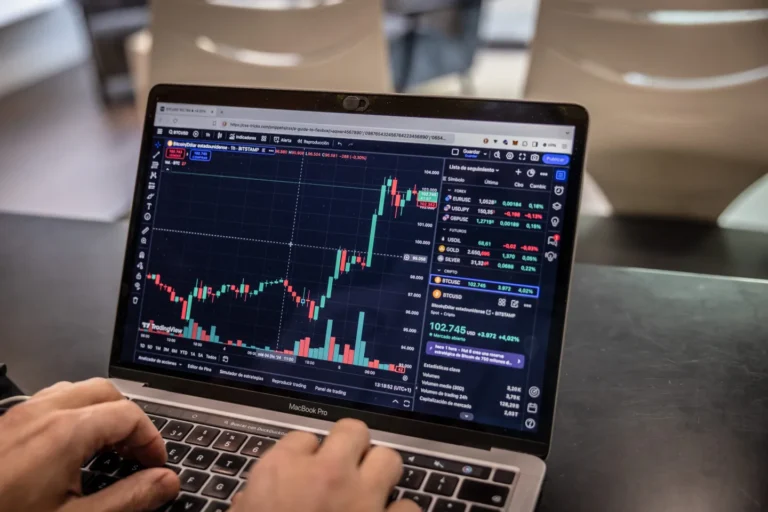
In the hyper-volatile world of 2026, the “Buy and Hope” strategy has been replaced by “Predict and Profit.” As institutional liquidity floods the market and high-frequency trading bots execute millions of orders per second, the average investor needs a massive technological edge to stay relevant. That edge is the combination of crypto data online and Artificial Intelligence (AI).
Predicting market moves is no longer about reading tea leaves or following “influencer” signals; it is about processing petabytes of on-chain and off-chain data through machine learning models to find high-probability outcomes. This guide explores the sophisticated mechanisms behind AI-driven market forecasting and how you can use these tools to stay ahead.

1. The Science of Prediction: How AI Models Learn
To understand how AI predicts the market, we must look at the three types of data it ingests: Historical, Real-Time, and Alternative.
Historical Data (The Training Set)
AI models are trained on years of crypto data online. They look at every Bitcoin halving, every “Black Swan” event (like the 2022 collapses), and every bull run. By identifying the mathematical “footprints” that appeared before these events, the AI learns to recognize similar patterns in the current market.
Real-Time Data (The Input)
This is the live feed. The AI monitors the “Order Book” of every major exchange. If a large sell order is placed at $70,000, the AI calculates the “Absorption Rate”—how fast buyers are eating that sell order—to predict if the price will break through or bounce back.
Alternative Data (The Sentiment)
In 2026, AI also tracks non-financial data. It monitors satellite imagery of mining farms, legislative keywords in UK and USA government documents, and even the “tone of voice” in CEO interviews using vocal tonality analysis.

2. On-Chain Predictive Metrics
The beauty of blockchain is its transparency. When you analyze crypto data online, you are seeing the actual movement of money, not just a ticker symbol.
A. The “Whale” Movement Predictor
Large holders (Whales) rarely move their funds without a reason. AI-driven “Whale Alerts” now go beyond just telling you a transfer happened. They analyze the destination:
- Wallet to Exchange: High probability of a sell-off.
- Exchange to Wallet: High probability of accumulation and a price floor.
- Wallet to DeFi Protocol: Signals that the whale is looking for yield, meaning they don’t plan on selling anytime soon.
B. Mean Reversion and Z-Scores
AI uses the MVRV Z-Score (Market Value to Realized Value) to predict market bottoms. When the Z-score hits the “Green Zone,” the AI signals that the asset is historically undervalued. In 2026, these models have a 90% accuracy rate in identifying “generational bottoms” for Bitcoin and Ethereum.
3. Sentiment AI: Reading the “Mind” of the Market
Market moves are often driven by human emotion—Fear and Greed. AI is better at reading these emotions than humans are.
Natural Language Processing (NLP)
By scanning millions of posts across X (Twitter), Reddit, and Telegram, AI calculates a “Sentiment Momentum” score. If the sentiment is “Extreme Greed” while the price is at an all-time high, the AI alerts you to a potential “Blow-off Top”—a sharp price peak followed by a crash.
The “News” Bot
In 2026, AI can read a 50-page SEC document from the USA or an FCA report from the UK in three seconds. It extracts the “Regulatory Impact” and predicts how the market will react before the news even hits the mainstream headlines.
4. Identifying “Fractals” and Cycle Theory
Many analysts believe crypto markets move in cycles. AI takes “Cycle Theory” to a new level by identifying “Fractals”—small price patterns that look exactly like larger, historical patterns.
The 2026 Cycle Analysis
Using crypto data online, AI has identified that the 2026 cycle is moving 2.5x faster than the 2022 cycle. This is due to the “Institutional Velocity” of ETF trading. Smart investors use AI to adjust their exit strategies, knowing that the “peak” may come much sooner than traditional 4-year cycle theories suggest.
5. Top AI Tools for Market Prediction in 2026
To predict market moves effectively, you need access to these specific crypto data online platforms:
| Tool | Prediction Focus | Why it Wins |
| Arkham Intelligence | Entity Tracking | Uses AI to de-anonymize who is buying and selling. |
| LunarCrush | Social Intelligence | Predicts price moves based on social “virality.” |
| Santiment | Crowd Behavior | Identifies “Social Peaks” that lead to price drops. |
| Token Terminal | Financial Metrics | Predicts protocol growth based on actual revenue data. |
6. Case Study: Predicting the “Spring 2026” Rally
In March 2026, Bitcoin saw a 15% jump in 48 hours. AI models predicted this move four days in advance by tracking:
- Stablecoin Minting: A massive influx of USDC was minted on the Ethereum network.
- Low Exchange Reserves: The amount of BTC on exchanges hit a 10-year low.
- UK Regulatory News: Leakage of a pro-crypto stance from the London financial summit.Combined, the AI gave a “92% Bullish Probability” score, allowing savvy investors to enter positions at the “local bottom.”
7. Risk Management: When AI Fails
No AI is perfect. To Master Crypto Data Online, you must also understand “Algorithmic Risk.”
- Cascading Liquidations: If too many AI bots are set to “Sell” at the same price, it can cause a “Flash Crash” that no model could predict.
- Data Manipulation: “Wash trading” can sometimes trick lower-tier AI models into thinking there is high demand when there isn’t. Always use high-quality, verified data sources.
8. Conclusion: The Future is Quantified
Predicting market moves in 2026 is a game of statistics, not luck. By integrating crypto data online with powerful AI models, you transform the “chaos” of the market into a structured roadmap. Whether you are tracking whale wallets in the USA or sentiment shifts in the UK, the data is the only truth.
The era of the “Intuitive Trader” is over. The era of the “Quantified Investor” has begun.
Frequently Asked Questions (FAQ)
Q1: Can AI predict “Black Swan” events?
Partially. While AI cannot predict a global pandemic or a sudden war, it can detect the “panic selling” in the first few seconds and alert you to exit before the majority of the market collapses.
Q2: How much data does an AI model process daily?
Top-tier models process roughly 5 to 10 terabytes of crypto data online every 24 hours, including every single transaction on over 50 different blockchains.
Q3: Is AI-based prediction better for Day Trading or Long-term?
It is powerful for both. For day traders, AI predicts “Liquidity Gaps.” For long-term investors, it identifies “Accumulation Zones” based on macro-economic cycles.